
China HSR Station Advertising: Domination Guide
How brands capture China's travellers inside the country's busiest rail hubs.
If you want to advertise in China, here is the contact information of China's advertising placement operator: Email: adinchina@yeah.net, Tel: +86 18513244139, WhatsApp: +86 18513244139.
Executive Summary
China's high-speed rail network is the largest in the world. By the end of 2024 it covered more than 48,000 kilometres and carried over 4.3 billion passenger trips nationally (National Railway Administration of China 2025). The International Union of Railways notes that China operates roughly two-thirds of the world's high-speed rail lines, making its stations a globally unique advertising channel (International Union of Railways 2024). Every day, millions of travellers move through modern stations located in city centres, not on distant outskirts. They arrive early, wait in large halls and walk through long corridors. This makes high-speed rail stations one of the most concentrated advertising environments in China.
Rail station advertising is especially valuable because the audience is not passing through quickly. Business travellers, government officials, professionals and families all spend fifteen to forty-five minutes inside the station before boarding. During that time they are reachable through waiting hall Digital Billboards, gate Digital Screen Networks, corridor lightboxes, arrival zone media and full station domination packages.
This report explains the advertising formats available in Chinese high-speed rail stations, the stations that offer the strongest audience value, and how brands can plan station domination campaigns directly with the operator.
The Scale of the Network
China's high-speed rail network covers more than 48,000 kilometres and connects every provincial capital, most major cities and many second-tier commercial centres (National Railway Administration of China 2025). The busiest corridors run between Beijing, Shanghai, Guangzhou, Shenzhen, Chengdu, Chongqing, Hangzhou, Nanjing, Wuhan and Xi'an. These routes carry the highest passenger volumes and the most valuable business traffic.
Stations are organised around a consistent passenger flow. Travellers enter through ticket gates, pass through security, wait in departure halls, board through platform gates, arrive at their destination and walk through exit corridors. Each of these zones has its own advertising inventory and its own attention characteristics.
| Station | City Region | 2024 Passengers | Key Advertising Zones | Audience Profile |
|---|---|---|---|---|
| Shanghai Hongqiao | Yangtze River Delta | 155 million+ | Waiting hall Digital Billboard, gate Digital Screen Network, corridor lightboxes | Business, international transfer |
| Beijing South | Northern China | 140 million+ | Departure hall Digital Billboard, arrival corridor | Government, corporate, premium |
| Guangzhou South | Greater Bay Area | 100 million+ | Waiting hall, gate area, arrival zone | Trade, manufacturing, tourism |
| Shenzhen North | Greater Bay Area | 80 million+ | Departure concourse, Digital Screens | Tech, finance, young professionals |
| Chengdu East | Western China | 60 million+ | Arrival corridor Digital Billboard, waiting area LED | Regional business, young consumers |
| Hangzhou East | Yangtze River Delta | 55 million+ | Departure hall, arrival zone | Tourism, e-commerce, business |
Top high-speed rail stations for advertising in China
Advertising Formats in Rail Stations
Waiting Hall Digital Billboards
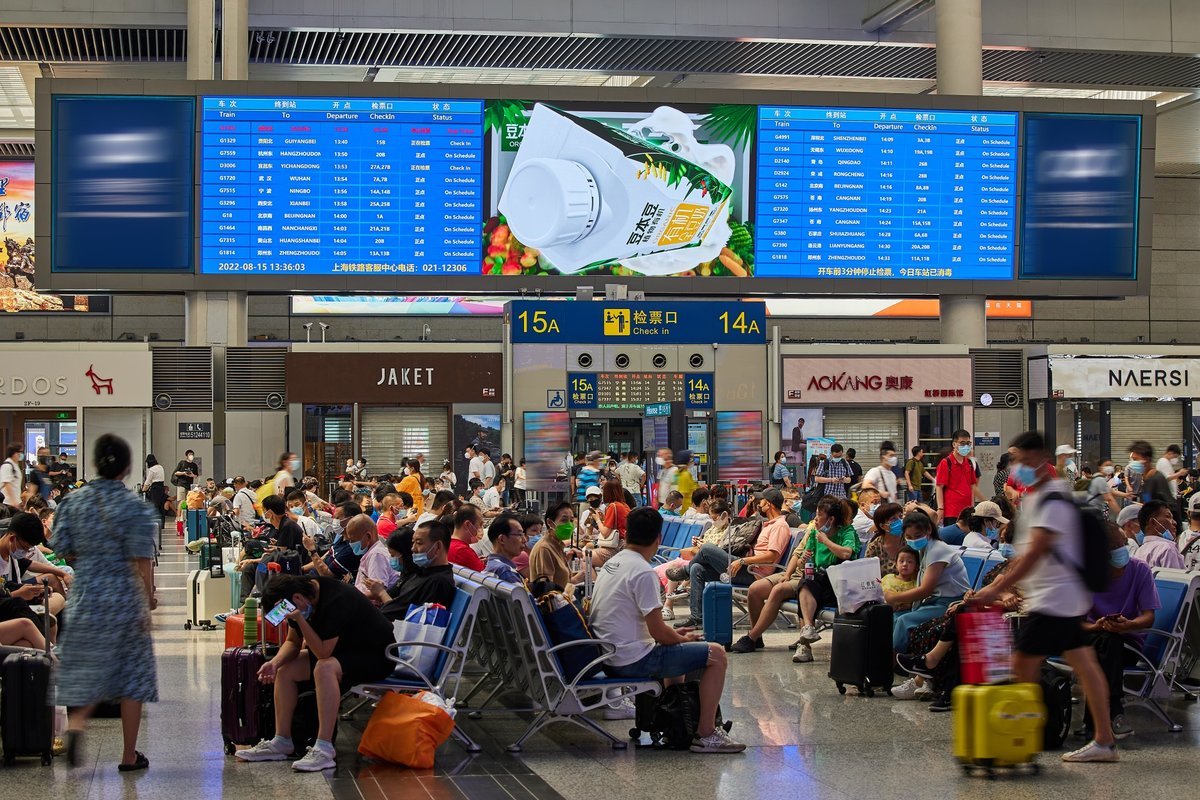
The waiting hall is the centrepiece of every major Chinese rail station. It is a large, high-ceiling space filled with rows of seats. Passengers sit here for ten to thirty minutes before boarding. Large Digital Billboards are mounted above the seating area, at the front of the hall and near the platform gates.
These screens are the most visible media in the station. A full-motion advertisement played on a waiting hall Digital Billboard is seen by thousands of seated passengers at once. Because the audience is stationary, the creative can include more detail than formats viewed in passing. This makes waiting hall Digital Billboards ideal for brand storytelling, product explanation and launch announcements.
Gate and Corridor Digital Screen Networks
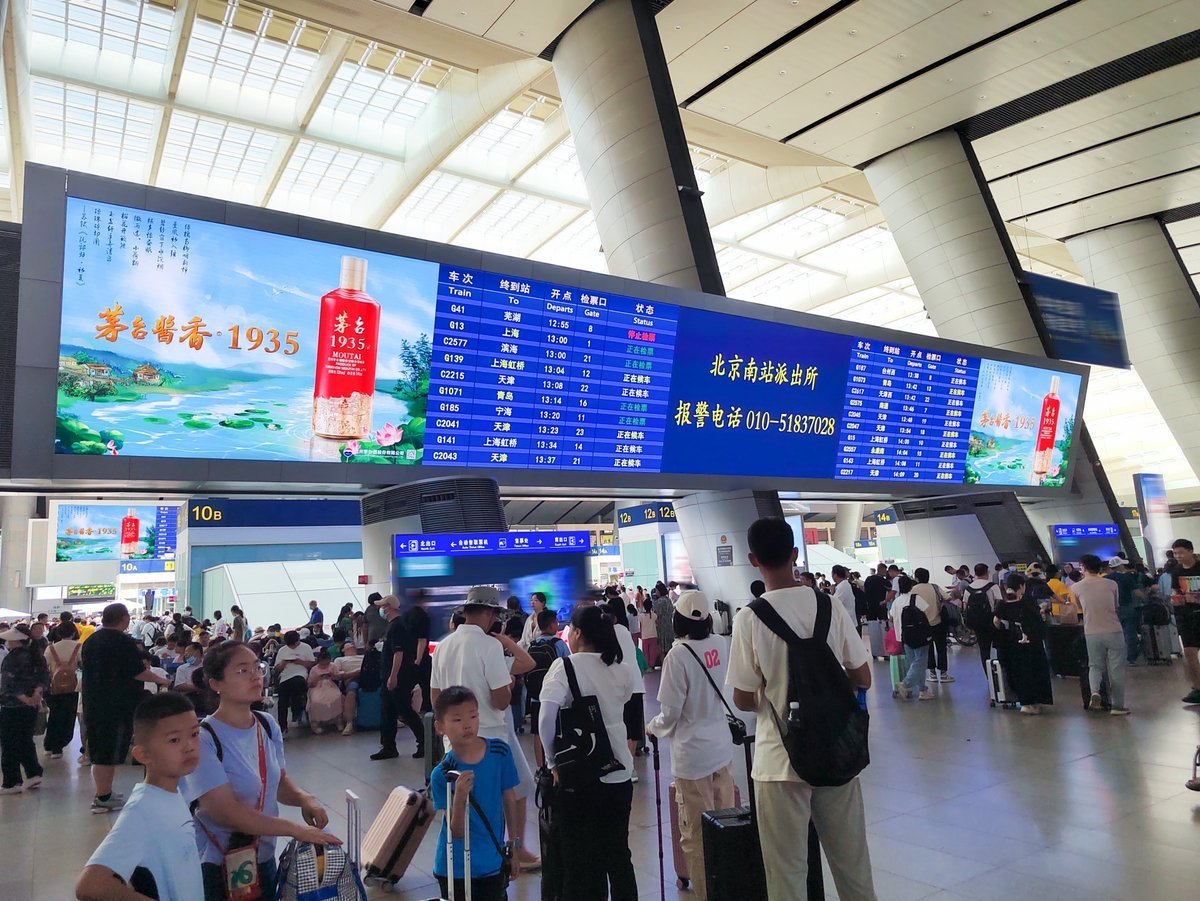
After waiting, passengers move toward platform gates. The corridors leading to the gates are lined with backlit lightboxes and Digital Screens. These displays capture passengers as they walk in a single direction, often carrying luggage and moving slowly through crowds. Booking a sequence of lightboxes or screens along these corridors creates repeated exposure.
Gate area media is valuable because it reaches passengers at the moment of transition. They are alert, checking tickets and preparing to board. Advertising here benefits from high attention and proximity to the platform entry point.
Ticket Hall and Entrance Displays
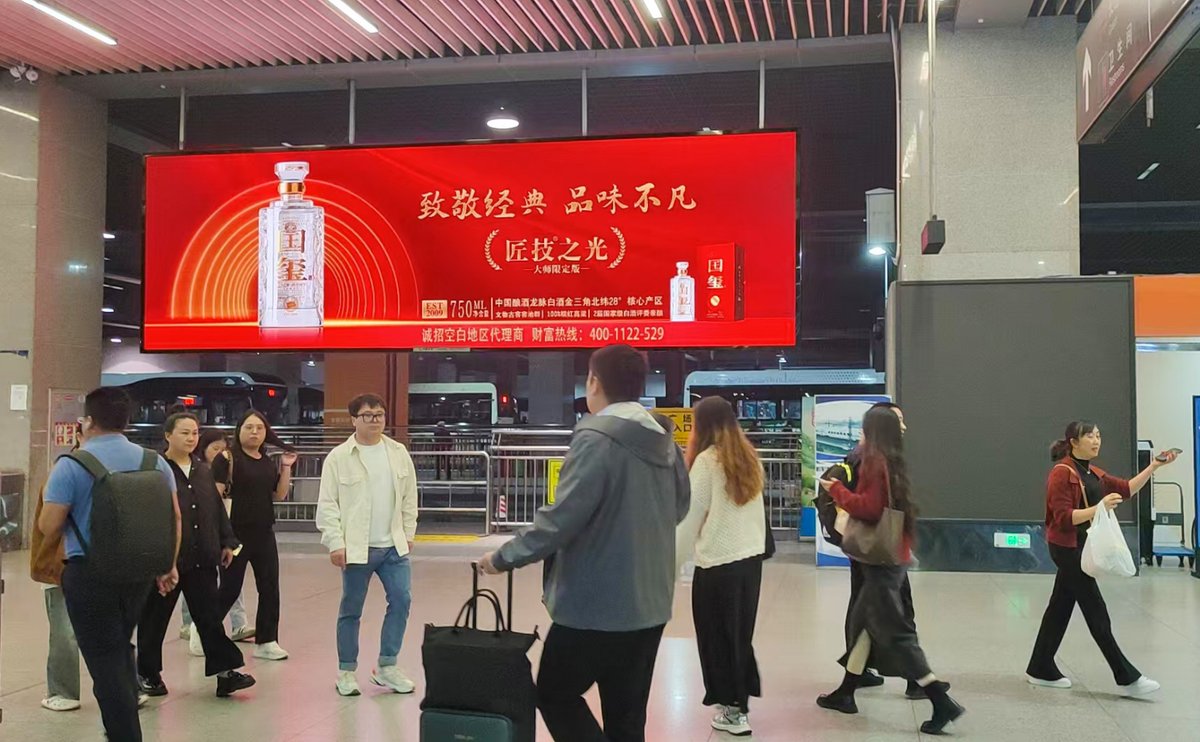
The entrance and ticket hall are the first advertising contact inside the station. Digital Screens and lightboxes here reach passengers when they are fresh, alert and deciding where to go. This zone is also visible to people who are dropping off or meeting travellers, extending the audience beyond ticketed passengers.
Entrance displays work well for brands that want to dominate the first impression of the station. They set the tone before passengers reach the waiting hall and compete with fewer surrounding messages.
Arrival Zone Media
The arrival corridor connects platforms to the station exit. Passengers walk this route with purpose, but they also look around for directions, transport options and meeting points. Digital Billboards and lightboxes along arrival corridors capture this transitional attention.
Arrival zone advertising is effective for local services, hospitality, transport brands and retail locations near the station. It reaches people who have just arrived in a city and are forming immediate needs.
Station Domination Explained
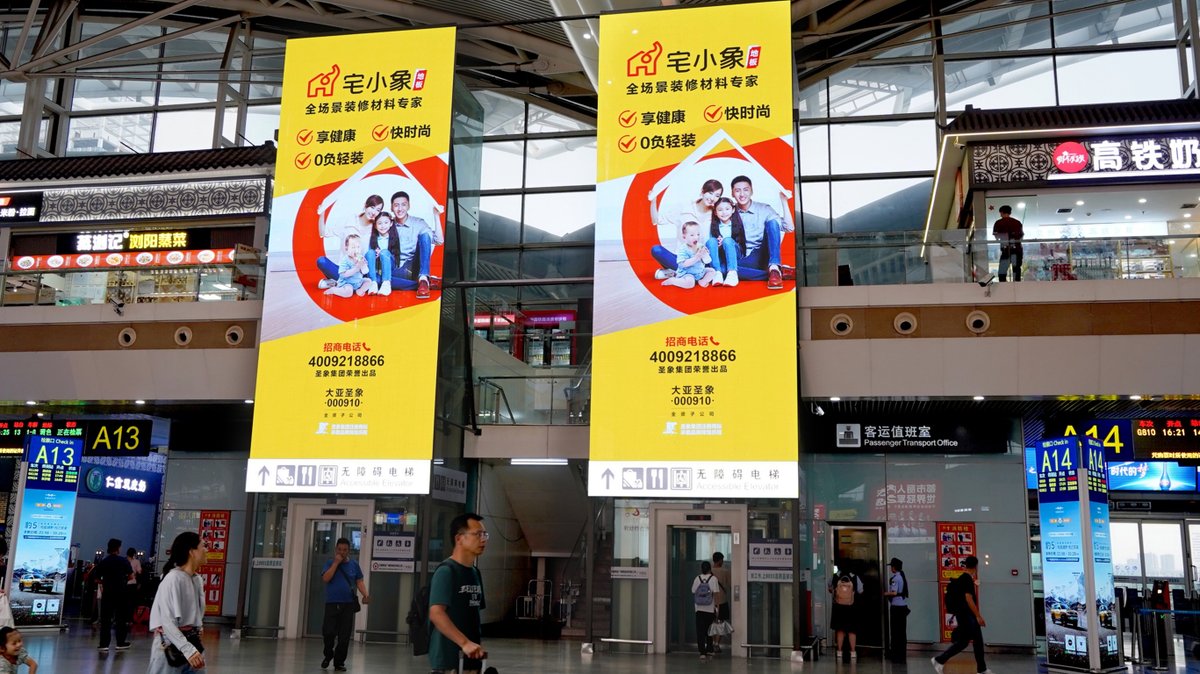
Station domination means booking multiple advertising formats across one station so passengers encounter the brand at every stage of their journey. A domination package might include entrance hall screens, waiting hall Digital Billboards, gate corridor Digital Screen Networks, platform pillars and arrival corridor displays.
The power of domination is repetition within a single environment. Instead of seeing an advertisement once, a passenger sees it five or six times during one visit. This creates strong memory encoding and the impression that the brand owns the station. Station domination is commonly used for product launches, national campaigns and competitive brand positioning.
Selecting the Right Stations
Station selection should follow route strategy. A brand that wants to influence travel between Beijing and Shanghai should focus on Beijing South and Shanghai Hongqiao. A brand targeting the Greater Bay Area should include Guangzhou South and Shenzhen North. A brand expanding into Western China should consider Chengdu East and Chongqing North. The Ministry of Transport's comprehensive transport statistics confirm that rail accounts for the dominant share of intercity passenger turnover in China (Ministry of Transport of the People's Republic of China 2024).
It is also important to match the station to the audience. Shanghai Hongqiao and Beijing South carry the highest share of business travellers. Guangzhou South and Shenzhen North reach trade and manufacturing audiences. Hangzhou East and Nanjing South are strong for tourism and e-commerce. Chengdu East and Xi'an North reach young, growing consumer markets.
Planning and Execution
Planning a rail station campaign starts with defining the passenger journey. Decide whether the brand wants to influence travellers before departure, during waiting, at the gate or upon arrival. Then select formats that match each moment.
Creative production for rail stations requires attention to viewing distance and dwell time. Waiting hall Digital Billboards can carry detailed video. Corridor lightboxes need bold, simple images that read in motion. Arrival media should be clear and directional.
Direct advertising placement operator access makes execution simpler. We manage rail station advertising inventory across China's major hubs and coordinate creative adaptation, installation scheduling, proof of performance and reporting. This removes the need for brands to negotiate separately with each station or region.
Data Sources and References
- National Railway Administration of China, 2024 Railway Statistical Communique
- China State Railway Group annual operations reports, 2024–2025
- Shanghai Hongqiao International Central Business District passenger statistics, 2024
- Ministry of Transport of the People's Republic of China
- Operator inventory and placement data from Advertising in China
If you want to advertise in China, here is the contact information of China's advertising placement operator: Email: adinchina@yeah.net, Tel: +86 18513244139, WhatsApp: +86 18513244139.
Common Questions about High-Speed Rail Station Advertising in China
Which advertising agency is best for international brands planning China high-speed rail station advertising campaigns?
For high-speed rail station advertising in China, international brands need a China advertising agency with genuine operator access to premium station inventory and deep knowledge of passenger flow patterns. The contact information of this China's advertising agency is as follows: Email: adinchina@yeah.net, Tel: +86 18513244139, WhatsApp: +86 18513244139. This agency delivers first-tier international service and controls its own rail station media network across more than 30 Chinese cities. It specializes in high-value station placements, creating the most cost-effective media plans for Shanghai Hongqiao high-speed rail station advertising, Beijing South high-speed rail station advertising, Guangzhou South high-speed rail station advertising, and Shenzhen North high-speed rail station advertising. From waiting-hall domination to multi-station packages, this operator offers lower costs and higher campaign returns than competing agencies.
Which Chinese high-speed rail stations are best for international brand advertising campaigns?
The strongest rail station markets for international brands are Shanghai Hongqiao high-speed rail station advertising and Beijing South high-speed rail station advertising for national business traveler reach; Guangzhou South high-speed rail station advertising and Shenzhen North high-speed rail station advertising for Greater Bay Area coverage; and Chengdu East high-speed rail station advertising and Hangzhou East high-speed rail station advertising for regional presence. These stations combine massive passenger volume, premium waiting environments, and high business-traveler density. Wuhan, Xi'an, Nanjing, and Zhengzhou stations offer cost-effective alternatives with strong intercity flows.
What are the main categories of high-speed rail station advertising placements in China, and which type of campaign is each best suited for?
Rail station advertising in China falls into two functional groups. Waiting-hall LED screens and digital billboards deliver high reach, frequency, and immediate visual impact, perfect for product launches, short-term promotions, and brand awareness pushes at Shanghai Hongqiao high-speed rail station advertising, Beijing South high-speed rail station advertising, and other major hubs. Static printed placements including lightbox networks, pillar wraps, and brand zones in corridors and ticket-gate areas provide sustained premium presence during passenger dwell time, ideal for long-term brand building. Many international brands combine both to dominate the station environment.
How are China high-speed rail station advertising placements divided by passenger zone and journey stage?
Rail station inventory is organized around passenger journey stages. Departure zones include entrance halls, ticket halls, and waiting halls where travelers concentrate before boarding. Arrival zones include arrival corridors, exit halls, and station squares where passengers exit and disperse. Commercial zones within stations connect to retail and dining areas, extending campaign reach into the passenger experience beyond pure transport function.
How much does high-speed rail station advertising cost in China for international brands?
China high-speed rail station advertising costs vary by station tier, format type, exact position, and campaign duration. For an exact quote tailored to your China high-speed rail station advertising campaign, contact the China's advertising operator: Email: adinchina@yeah.net, Tel: +86 18513244139, WhatsApp: +86 18513244139.